
Fascia replacement
The board behind the gutter, replaced back to sound framing, with the gutter re-hung on a surface that can hold it.
Fascia and soffit sit directly under the roof edge, which means they take every gallon the roof sheds and every bit of overflow when a gutter backs up. On most homes they are soft years before the siding is.
No obligation · Photos included · Clear written scope
Trim is the sacrificial layer of an exterior. Fascia takes roof runoff, soffit closes the eave, rake boards run up the gable edge and corner boards close the vertical joints — and every one of those is positioned exactly where water concentrates. That is why a house can have sound siding and completely failed trim.
Replacing siding and leaving soft trim behind is one of the most common ways a good-looking exterior job goes wrong. The new wall looks right for a year, and then the same water that rotted the trim keeps running into the same joints. We check the trim on every inspection, whether or not the call was about it.
When we rebuild trim we prime the back and the cut ends before it goes up, not just the face after. It is a small step that is skipped constantly, and it is most of the difference between trim that lasts and trim that fails from behind.
Usually alongside siding or chase work, because the details meet each other.
The board behind the gutter, replaced back to sound framing, with the gutter re-hung on a surface that can hold it.
Eave panels replaced with the ventilation path kept intact, not blocked up to make the panel fit.
Gable edges and vertical corners rebuilt and sealed, where two planes of the exterior meet.
Casings and sills rebuilt and flashed, because an opening is the single most common place water gets in.
Trim fails from the back and the ends, which is exactly where field-applied paint usually is not.
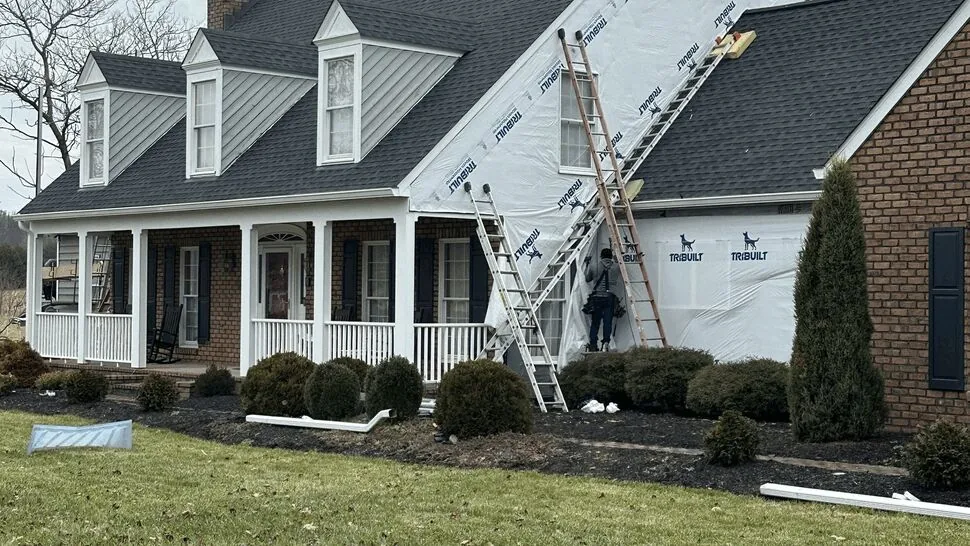
Position and geometry. Fascia and soffit sit under the roof edge where runoff concentrates, and trim is made up almost entirely of joints and cut ends, which absorb water much faster than a board face does.
No — the fascia is the board the gutter is fastened to, so the gutter has to come off to replace it and then be re-hung. That is part of the scope, and we will say so in writing rather than discovering it on the day.
It depends on the house and the exposure. The more important part is the detail: back-priming, sealed end grain and a joint that sheds water. Trim fails at those three things far more often than it fails because of the material it was cut from.
On its own is fine. Trim, fascia and soffit are frequently the whole scope, particularly on a house where the walls are still sound but the eaves have been taking gutter overflow for years.
Local housing stock and exposure change what we look at first. Pick your city.
Free on-site inspection, photographs and a written scope before any work begins.