
Full chase re-siding
Siding replaced above and below the roofline, with corners and transitions detailed for a structure exposed on all four sides.
On most Texas homes the chimney is not masonry all the way up. It is a tall wood-framed box, wrapped in the same siding as your walls, standing higher than anything else on the house. It fails first — and it is the one part of the exterior most siding crews quietly leave out of the quote.
No obligation · Photos included · Clear written scope
A chimney chase is a framed, sided enclosure built around a metal flue. From the street it reads as a chimney; structurally it is a tall, narrow section of exterior wall with a lid on it. Everything that can fail on a wall can fail on a chase — and it does so sooner, because of where it sits.
What makes a failing chase expensive is where the water goes. It does not run down the outside where you would see it. It gets past the cap or a failed joint, runs down inside the framing, and follows the chase through the roof assembly into the ceiling below. By the time there is a stain on a bedroom ceiling, the framing inside the chase has usually been wet for a long time.
Working on one is a different job from siding a wall. It means scaffolding or roof staging, protection for the roof covering, and a crew comfortable working above the roofline. That setup cost is exactly why many siding quotes stop at the gutter line and treat the chase as someone else's problem. We treat the chase, its framing and its cap as one scope with the rest of the exterior.
New siding over rotted framing or a failed cap buys a season. All three have to be addressed together.
Siding replaced above and below the roofline, with corners and transitions detailed for a structure exposed on all four sides.
Rotted studs, plates and sheathing inside the chase rebuilt before anything new is fastened to them.
A cap sized and sloped to shed water away from the box, with flashing detailed where the chase meets the roof.
The base of the chase, where it meets the roof plane, is the hardest detail on the structure and the most common leak point.
Most of the risk in chase work is access. Getting the staging and roof protection right is what makes the rest of it routine.
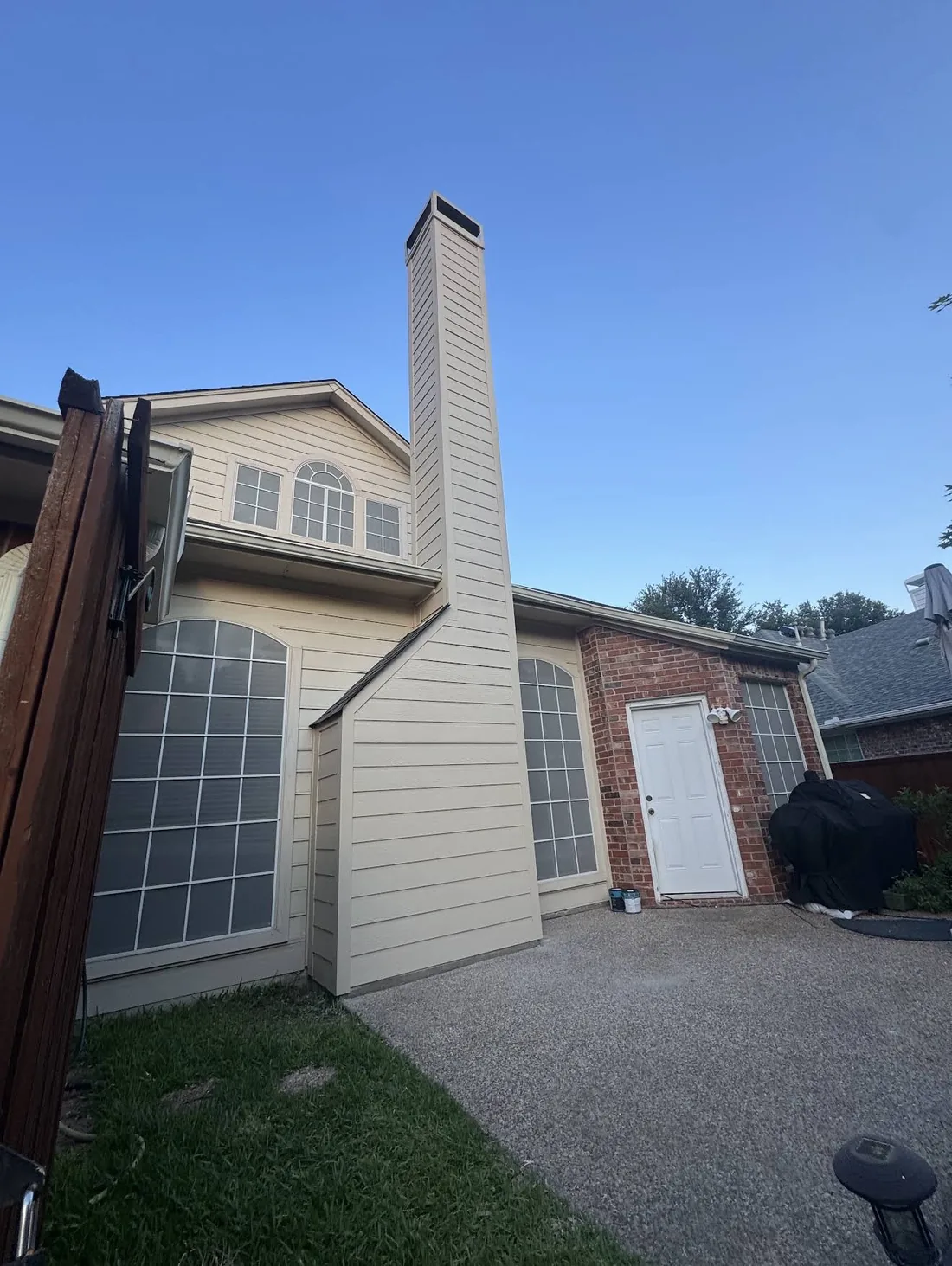
It is a wood-framed, sided box built around a metal flue, used instead of a full masonry chimney. On the outside it is finished with the same siding and trim as the rest of the house, and it is capped at the top with a metal chase cover.
Access. Working above the roofline needs staging, roof protection and a crew willing to work at that height, and it slows a job down. It is easier to quote the walls and leave the chase out, which is why so many recently re-sided homes still have an original failing chase.
Yes, if the siding and framing underneath are still sound. A cap replacement on its own is a sensible job when the cap is the only thing that has failed. If the inspection shows water has already been getting into the box, we will show you the photos and explain what else needs doing.
It can be, and the chase is worth ruling out — a failed cap or chase joint drains straight down inside the framing and shows up on the ceiling below rather than running down an outside wall. It can also be roof flashing or the flue itself. The inspection is what separates them.
Local housing stock and exposure change what we look at first. Pick your city.
Free on-site inspection, photographs and a written scope before any work begins.